Turning Vision into Measurable Results in Ministry
The 4 Disciplines of Execution (4DX), developed by Chris McChesney, Sean Covey, and Jim Huling, is a strategic framework used in businesses and organizations to bridge the gap between vision and execution. Many churches have great vision but struggle to implement it effectively. By applying 4DX in church management, leadership teams can focus on what truly matters, ensuring that vision translates into real, measurable impact.
Overview of the 4 Disciplines of Execution (4DX):
1️⃣ Focus on the Wildly Important Goals (WIGs) – Prioritize key objectives that will make the greatest impact.
2️⃣ Act on the Lead Measures – Identify and track behaviors that drive results.
3️⃣ Keep a Compelling Scoreboard – Make progress visible and engaging.
4️⃣ Create a Cadence of Accountability – Establish a rhythm of regular follow-up and commitment.
Let’s see how to apply these four disciplines in church management.
1. Focus on the Wildly Important Goals (WIGs) in Church Leadership
✔ Matthew 28:19-20 – “Go and make disciples of all nations…”
🔹 Challenge:
- Many churches try to do too much at once, leading to burnout and inefficiency, which ultimately affects their overall mission and vision, reducing the effectiveness of their programs and services that could genuinely benefit the community.
- Without clear goals, ministries can become busy but ineffective, often leading to wasted resources and missed opportunities for meaningful impact on the communities they serve, thus reducing their overall effectiveness in achieving their missions and fulfilling their responsibilities.
🔹 Solution (Applying WIGs in Church Management):
✅ Identify one or two “wildly important goals” (WIGs) that will have the greatest impact on the church’s growth, considering both spiritual and community aspects.
✅ WIGs should be specific, measurable, and time-bound (not vague), ensuring that progress can be tracked effectively over a designated period. This clarity enables everyone to understand what success looks like and how it can be achieved.
✅ Align all ministries with these key goals for focused execution, creating a clear roadmap that encourages collaboration and reduces duplication of efforts. By establishing this alignment, each ministry will contribute meaningfully toward the overarching vision, fostering a sense of unity and purpose within the church community.
✔ Examples of Wildly Important Goals (WIGs) for a Church:
- Increase Small Group Engagement – “Grow small group participation from 50 to 150 members by the end of the year.”
- New Member Retention – “Ensure 80% of new visitors attend a second service within four weeks.”
- Increase Volunteer Involvement – “Grow the number of active volunteers from 30% to 50% of the congregation within six months.”
- Outreach Growth – “Increase church outreach events from 2 to 6 per year, reaching at least 500 new people in the community.”
💡 Key Takeaway: A church should only focus on 1-2 major goals at a time, rather than trying to fix everything at once. By concentrating efforts on a limited number of objectives, the church can allocate resources more efficiently and foster a deeper engagement within the community. This focused approach allows for clearer communication, better tracking of progress, and ultimately, a greater likelihood of achieving meaningful, sustainable change. Additionally, when achievements are celebrated, it can enhance motivation and unity among members, creating a positive feedback loop that encourages further growth and development.
2. Act on the Lead Measures (What Drives Success?)
✔ Proverbs 21:5 – “The plans of the diligent lead surely to abundance…”
🔹 Challenge:
- Churches often focus on lag measures (results like attendance or giving), but these come too late to change the outcome of their initiatives and can lead to missed opportunities for growth and connection within the community. Instead, they may benefit from incorporating lead measures that provide proactive insights and enable timely adjustments to their strategies, fostering a more dynamic and responsive environment.
- Success is driven by lead measures—the key behaviors that predict results, focusing on strategies that are within your control and enabling you to make proactive decisions to achieve your desired outcomes.
🔹 Solution (Identifying and Acting on Lead Measures):
✅ Define small, measurable, and controllable actions that drive the WIGs, ensuring that each action is relevant and contributes significantly to the overall goals.
✅ Track these behaviors weekly to ensure progress, making adjustments as necessary, and celebrate milestones to maintain motivation among the team.
By consistently focusing on these lead measures, you create a culture of accountability and continuous improvement, ultimately leading to greater success in reaching your objectives.
✔ Examples of Lead Measures for Church WIGs:
| Church WIG | Lead Measures (Key Actions to Track) |
|---|---|
| Increase Small Group Engagement | Track how many personal invitations are made to join a group per week. |
| Improve New Member Retention | Track how many first-time visitors receive a follow-up call/text within 48 hours. |
| Grow Volunteer Involvement | Track how many people attend a volunteer orientation session each month. |
| Expand Outreach Efforts | Track how many outreach contacts are made per month (prayer walks, food drives, evangelism events). |
💡 Key Takeaway: Churches should track daily and weekly behaviors that lead to the big goal—not just wait for the results. By actively monitoring these behaviors, they can identify patterns, celebrate small victories, and make necessary adjustments along the way. This proactive approach ensures that members remain engaged and motivated, transforming what could be a passive waiting game into an active journey toward achieving communal aspirations. Additionally, documenting these efforts can foster accountability and create a culture of growth and improvement within the congregation, ultimately leading to sustained success over time.
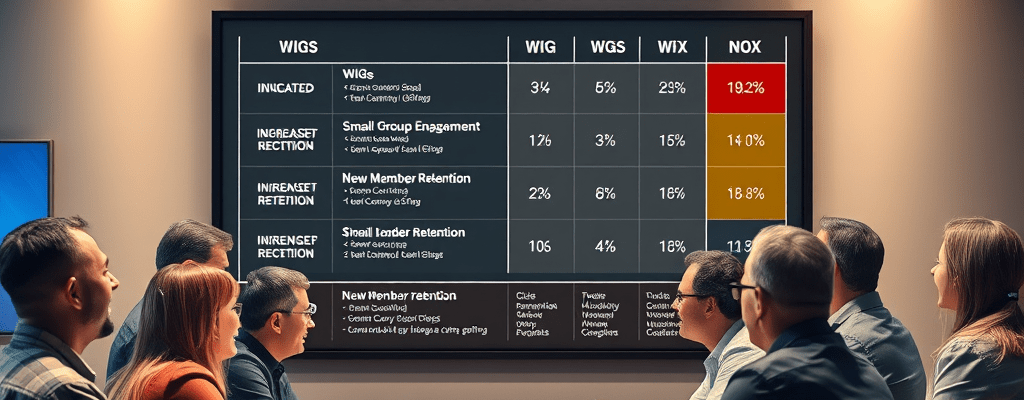
3. Keep a Compelling Scoreboard (Make Progress Visible)
✔ Habakkuk 2:2 – “Write the vision and make it plain on tablets, that he may run who reads it.”
🔹 Challenge:
- Many churches have no clear way to track progress, leading to a lack of urgency or accountability. This absence of measurable goals and performance indicators creates an environment where it’s difficult to assess spiritual growth, community involvement, and overall effectiveness in mission work. As a result, issues that require immediate attention may go unnoticed, and congregational members may not feel motivated to engage actively in church activities or outreach programs, ultimately stunting the church’s ability to fulfill its purpose.
- Without visible progress, teams lose motivation and focus, which can lead to decreased overall productivity and can create a sense of frustration among team members, making it essential to implement visible milestones that provide a sense of achievement and keep the team engaged.
🔹 Solution (Creating a Church Scoreboard):
✅ Create a simple, visible scoreboard to track progress on WIGs, ensuring that it is placed in a high-traffic area where congregation members can easily see it.
✅ Scoreboards should be easy to understand at a glance (graphs, charts, or progress meters) to foster engagement and encourage participation, possibly incorporating various colors to represent different levels of achievement.
✅ Update scoreboards weekly to show movement toward goals, allowing time for reflection on what’s working and what needs improvement; this could also include highlighting stories of progress to inspire others.
✔ Examples of Church Scoreboards:
- 📊 Small Group Growth Tracker – Number of new attendees per group (goal: 150 members).
- 🏆 Volunteer Engagement Board – Percentage of congregation serving (goal: 50%).
- 🔥 Outreach Impact Board – Number of people reached in events (goal: 500).
💡 Key Takeaway: People are more engaged when they see progress—a scoreboard creates momentum and motivation.
4. Create a Cadence of Accountability (Regular Follow-Up & Commitment)
✔ Proverbs 27:17 – “Iron sharpens iron, so one man sharpens another.”
🔹 Challenge:
- Many churches start strong but lose momentum over time, often facing challenges that can lead to stagnation, a decrease in congregation size, or a lack of engagement in community activities.
- Without regular accountability, execution becomes inconsistent and ineffective, leading to missed opportunities, reduced productivity, and ultimately a failure to achieve desired outcomes in both personal and professional settings.
🔹 Solution (Applying Accountability in Church Leadership):
✅ Hold weekly or bi-weekly WIG review meetings to discuss progress, ensuring that all leaders come prepared with updates and insights that foster a collaborative environment.
✅ Every ministry leader commits to small, measurable weekly actions toward the goal, carefully tracking their achievements and identifying any obstacles they may face along the way.
✅ Leaders pray, encourage, and challenge each other to stay committed, fostering a culture of support and spiritual growth that strengthens their resolve to fulfill the church’s mission and enhance their collective impact on the community.
✔ Example of a Weekly WIG Review Meeting:
1️⃣ Celebrate Wins – “Last week, we added 10 new small group members!”
2️⃣ Review the Scoreboard – “We’ve reached 60/150 small group members.”
3️⃣ Commit to New Actions – “Each leader will invite 5 more people this week.”
4️⃣ Encourage & Pray – “Lord, help us reach more people for discipleship.”
💡 Key Takeaway: Weekly check-ins create momentum, accountability, and spiritual encouragement to keep the team engaged.
Final Thoughts: Transforming Church Management with 4DX
✅ 4DX helps churches move from “dreaming” to “doing.”
✅ Focusing on 1-2 key goals brings clarity and impact.
✅ Tracking lead measures ensures daily habits drive results.
✅ Visible progress (scoreboard) motivates the team.
✅ Regular accountability keeps the vision alive.
When churches apply 4DX with prayer and biblical wisdom, they can grow spiritually and structurally, ensuring that their mission is carried out effectively for God’s glory.
🙌 “Not by might nor by power, but by My Spirit,” says the Lord of hosts. – Zechariah 4:6
 budi hidajat